Scissor Lift vs Boom Lift: Which One Should You Choose?
Quick Answer: Choose by Movement, Not Just Height
If your work is mostly straight up and down, a scissor lift is usually the simpler and more cost-effective choice. If the platform must reach over obstacles, around structures, across landscaping, or into hard-to-access areas, a boom lift is usually the better tool.
Many buyers start by asking, "How high do I need to go?" Height matters, but it is not the only question. A safer way to choose is to look at the work path: does the operator need vertical access only, or vertical plus horizontal outreach?
What Is a Scissor Lift Best For?
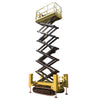
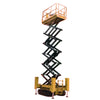
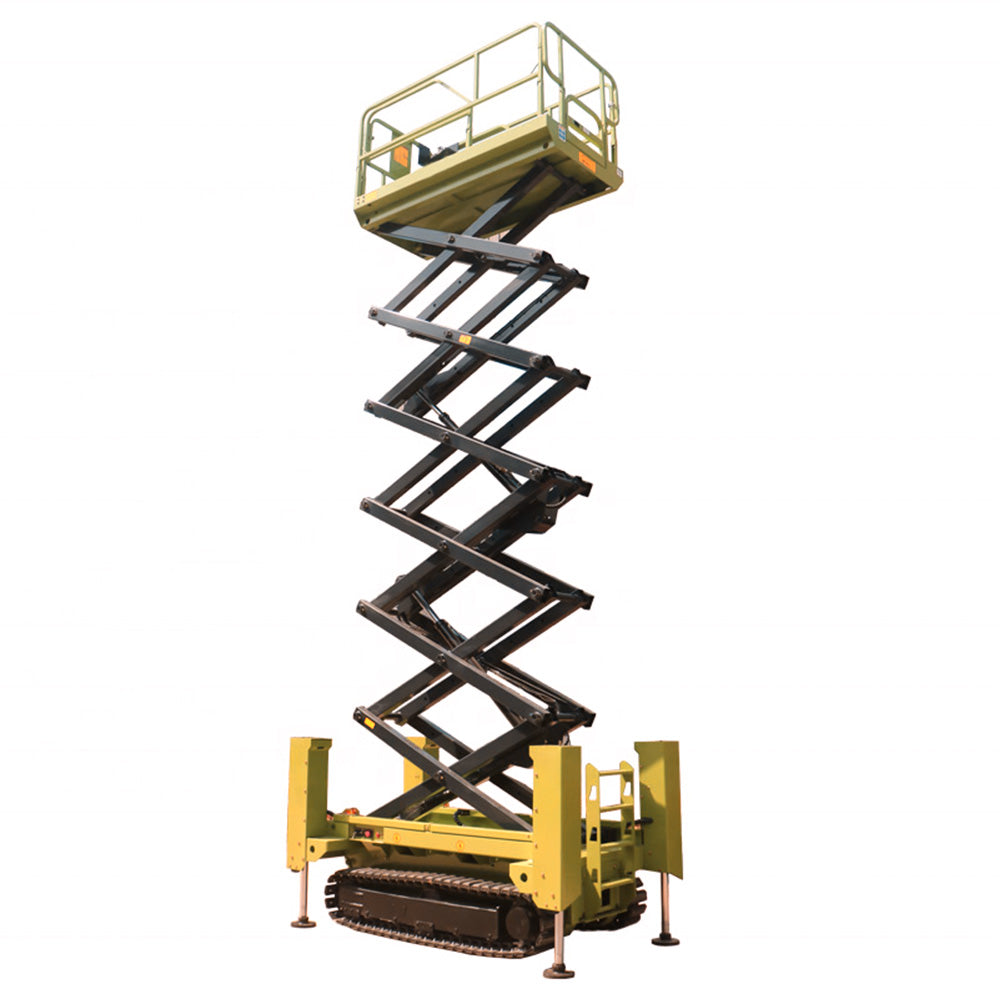
A scissor lift raises the platform vertically using crossed lifting arms. It is stable, efficient, and easy to position when the work area is directly above the machine. For indoor maintenance, warehouse racking, ceiling work, lighting replacement, and installation tasks on flat floors, it is often the first machine to consider.
For example, Coman electric scissor lift models are designed for clean indoor operation and working heights from about 7.8 m to 15.8 m, depending on the model. The platform is wide enough for tools and one or two operators, while the compact body helps the machine move through aisles and facility corridors.
Common Scissor Lift Applications
- Warehouse lighting, HVAC, and ceiling maintenance
- Retail store and shopping mall maintenance
- Factory inspection and indoor installation work
- Inventory access and rack-side work
- Signage installation on flat floors
- Outdoor vertical access when using rough-terrain or tracked scissor lifts
What Is a Boom Lift Best For?
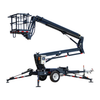
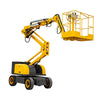
A boom lift uses an extending or articulating arm to move the platform both upward and outward. That outreach is the key difference. Boom lifts are useful when the machine cannot be placed directly under the work point.
Think of tree care, facade repair, electrical work, roof-edge access, and equipment maintenance above obstacles. In these situations, a vertical-only platform may force the operator into an awkward or unsafe position. A boom lift can place the basket closer to the work area while the base stays on a suitable surface.

Common Boom Lift Applications
- Building facade inspection and repair
- Tree trimming and landscaping work
- Outdoor construction and steel structure work
- Electrical line or lighting maintenance
- Access over machinery, fences, landscaping, or parked equipment
- Jobs requiring up-and-over positioning with a towable, truck-mounted, or articulating boom lift
Scissor Lift vs Boom Lift: Main Differences
| Factor | Scissor Lift | Boom Lift |
|---|---|---|
| Movement | Vertical lift only | Vertical plus horizontal outreach |
| Best work position | Directly under the work area | Away from or beside the work area |
| Platform size | Usually larger, good for tools and materials | Usually smaller basket, focused on access |
| Typical capacity | Often higher platform capacity | Usually lower than scissor lift platforms |
| Indoor use | Excellent with electric models | Good with electric models, depending on space |
| Outdoor terrain | Good with diesel, rough-terrain, or tracked models | Very strong for outdoor reach and obstacle access |
| Cost | Usually lower purchase and rental cost | Usually higher because of boom structure and controls |
| Learning curve | Generally simpler | Requires more attention to outreach, swing, and positioning |
Choose a Scissor Lift When These Conditions Match
A scissor lift is usually the right choice when the job is vertical, the floor is level, and operators need a stable platform with enough room for tools. For indoor facilities, battery-powered machines are especially practical because they produce no exhaust emissions and lower noise than engine-powered equipment.
Use a Scissor Lift If:
- The work point is directly above or close to the machine.
- The surface is flat, firm, and suitable for the machine weight.
- You need more platform space for tools, panels, or small materials.
- The job is repetitive, such as warehouse maintenance or facility inspection.
- You want a lower-cost aerial work platform for common vertical access tasks.
For indoor work, review Coman's electric scissor lift. For outdoor jobs that need more traction, compare the diesel scissor lift or tracked scissor lift. If the site has slopes or uneven ground, a bi-leveling scissor lift may be worth reviewing.

Choose a Boom Lift When These Conditions Match
A boom lift is usually the better choice when access is not straight up. The machine can stay in a safer or more practical position while the platform reaches over obstacles or across a gap. This is why boom lifts are common for outdoor maintenance, construction, landscaping, and utility work.
Use a Boom Lift If:
- You need horizontal outreach, not just vertical height.
- The work point is above landscaping, equipment, roofs, fences, or structural obstacles.
- The operator needs to work along a facade or around corners.
- The jobsite changes frequently and mobility is important.
- You need a specialized format such as a towable boom lift or truck-mounted boom lift.
Height, Outreach, and Capacity: The Three Numbers Buyers Should Check
Before comparing brands or prices, confirm three numbers: required working height, required horizontal outreach, and required platform capacity. These details prevent overbuying and, more importantly, help avoid choosing a machine that cannot safely complete the work.
1. Working Height
Working height normally means the platform height plus the operator's working reach. Do not choose a machine only by the tallest point on the building. Consider where the operator's hands need to be, how close the machine can stand, and whether the floor or ground is level.
2. Horizontal Outreach
If the operator must reach over a machine, landscaping, a roof edge, or a production line, outreach becomes more important than platform height. This is where boom lifts have a clear advantage over scissor lifts.
3. Platform Capacity
Add the weight of operators, tools, and materials. Scissor lifts often provide more platform area and load capacity, which is helpful for installation and maintenance tasks. Boom lifts are better for positioning, but the basket capacity is usually more limited.
Indoor vs Outdoor: Power Source Matters
For indoor work, electric equipment is often preferred because it is cleaner and quieter. Electric scissor lifts are popular in warehouses, factories, shopping malls, and logistics buildings. Electric boom lifts can also work indoors, especially where outreach is needed, but turning radius and space should be checked carefully.
For outdoor work, ground condition becomes a major factor. Diesel or rough-terrain machines may be suitable for construction sites, while tracked lifts can be useful where the surface is soft or sensitive. If a project involves both outdoor terrain and vertical work, do not assume a boom lift is always required; a tracked or rough-terrain scissor lift may solve the job at a lower cost.
Safety and Compliance Considerations
Any aerial work platform should be selected and operated according to the jobsite risk assessment, local regulations, and the manufacturer's manual. In the United States, OSHA provides separate guidance for scissor lifts and aerial lifts. OSHA notes that only trained and authorized workers should operate aerial lift equipment, and employers should control hazards such as falls, tip-overs, contact with overhead objects, and crushing risks.
For buyers, this means the safest machine is not always the tallest or most powerful one. It is the machine that fits the ground, access path, load, operator training, and daily inspection requirements.
Cost: When a Cheaper Lift Becomes Expensive
Scissor lifts are often less expensive to buy, rent, transport, and maintain. If your team mainly works on flat indoor floors, buying a boom lift may add cost without adding much value.
However, choosing a scissor lift for a job that needs outreach can become expensive in another way. The crew may waste time repositioning the machine, or worse, work from an unsafe angle. In those cases, a boom lift can reduce labor time and improve access quality.
Practical Buying Checklist
- What is the required working height?
- Is horizontal outreach required?
- How many operators and tools will be on the platform?
- Is the surface flat concrete, rough ground, grass, mud, or slope?
- Will the machine work indoors, outdoors, or both?
- Are zero emissions or low noise required?
- How wide are doors, aisles, gates, and access paths?
- Will the equipment be transported often between jobsites?
- What training, inspection, and safety requirements apply locally?
Final Recommendation
Choose a scissor lift when the job is vertical, the surface is stable, and you need a practical platform for tools and repeated maintenance work. Choose a boom lift when the work point is difficult to approach from directly below and horizontal outreach is essential.
If you are comparing models for a real project, send ComanLifting your working height, ground condition, platform load, indoor/outdoor use, and photos of the work area. Our team can help match the job to the right scissor lift, boom lift, or specialized access platform. You can also contact us for a model recommendation based on your site conditions.
-
Publié dans
Aerial Work Platform, Boom Lift, Buying Guide, Equipment Comparison, Safety, Scissor Lift