Articulating vs Telescopic Boom Lift: Key Differences for Buyers
Quick Answer: Choose by Reach Path
Choose an articulating boom lift when the platform needs to go up, over, and around obstacles. Choose a telescopic boom lift when the job needs long, direct horizontal reach with fewer obstacles in the way.
Both machines are aerial work platforms designed for elevated access, but they solve different access problems. A telescopic boom lift extends in a straighter line. An articulating boom lift uses multiple boom sections and joints, making it more flexible around buildings, machinery, roof edges, structural steel, landscaping, and other barriers.
What Is an Articulating Boom Lift?
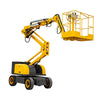
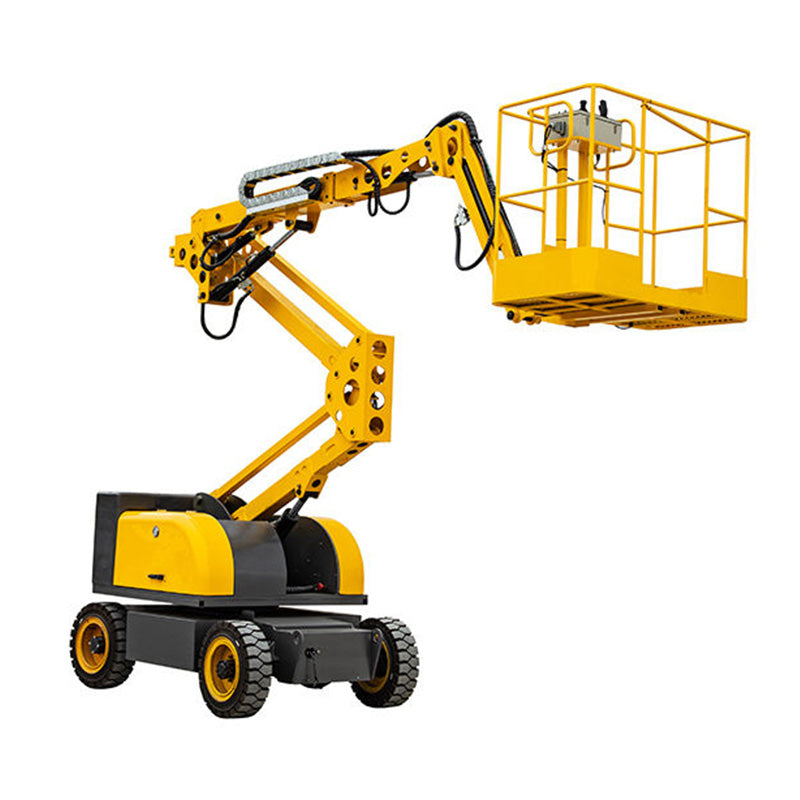
An articulating boom lift, sometimes called a knuckle boom lift, has jointed boom sections that allow the platform to move over and around obstacles. This makes it useful when the base of the machine cannot be placed directly in line with the work area.
For maintenance teams, facility managers, and contractors, the main advantage is positioning flexibility. A jointed boom can approach work from different angles, which is valuable for facade repair, piping, steel structure access, equipment maintenance, and indoor or outdoor areas with physical obstructions.
Best Uses for Articulating Boom Lifts
- Up-and-over work near walls, fences, pipes, machinery, or roof edges
- Building facade inspection and maintenance
- Industrial plants with equipment blocking direct access
- Indoor maintenance where electric models and tight positioning are needed
- Construction tasks that require frequent repositioning around structures
What Is a Telescopic Boom Lift?
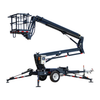
A telescopic boom lift, also called a straight boom lift, uses boom sections that extend outward in a more direct line. It is a strong choice when the work point is far away and the path to the work area is relatively open.
If the jobsite has open ground, long reach requirements, and fewer obstacles, a telescopic lift may be faster and more efficient. It is commonly used for exterior construction, bridge work, steel structures, utility access, and large outdoor projects where horizontal outreach is the deciding factor.

Best Uses for Telescopic Boom Lifts
- Long-reach construction and steel structure work
- Outdoor jobsites with open access paths
- Bridge, facade, and roof-edge work where direct reach is possible
- Utility and industrial maintenance where high outreach is required
- Applications where travel speed and direct positioning matter
Articulating vs Telescopic Boom Lift: Main Differences
| Factor | Articulating Boom Lift | Telescopic Boom Lift |
|---|---|---|
| Reach style | Up, over, and around obstacles | Straight, direct extension |
| Best jobsite | Congested areas with barriers | Open areas needing long outreach |
| Positioning | More flexible near structures | Efficient when line of reach is clear |
| Horizontal outreach | Good, but often less direct | Usually stronger for long direct reach |
| Learning curve | Requires careful joint positioning | Simpler reach path, but still needs training |
| Indoor use | Good with electric models and enough space | Less common indoors unless space is open |
| Cost | Can be higher for complex joint systems | Depends on height, power, and reach class |
Choose an Articulating Boom Lift When Obstacles Matter
An articulating boom lift is usually the better choice when the operator needs to reach over production equipment, pipe racks, trees, parapets, balconies, fences, or uneven building shapes. The jointed boom helps the platform approach the work point without placing the machine directly below it.
This can reduce repositioning time and help the operator work from a better angle. It is especially useful in maintenance projects where the jobsite was not designed around lift access.
Buyer Checklist for Articulating Boom Lifts
- What obstacles sit between the machine and the work point?
- How much up-and-over clearance is needed?
- Does the platform need to work around corners or roof edges?
- Will the machine be used indoors, outdoors, or both?
- Is electric, diesel, or hybrid power more suitable for the site?
For indoor or low-emission work, compare electric models such as the Coman V16 electric articulating boom lift or Coman V20 electric articulating boom lift. For outdoor heavy-duty work, review the diesel articulated boom lift.

Choose a Telescopic Boom Lift When Distance Matters
A telescopic boom lift is usually the better choice when the work point is far away and the reach path is clear. Straight boom extension is efficient for large outdoor jobsites, open industrial areas, and construction projects where long horizontal reach is more important than working around complex barriers.
Telescopic lifts are also useful when operators need to move along a long facade or access elevated points from a clear ground position. The machine still requires proper ground conditions, trained operators, and a safe setup, but the reach path is more direct than an articulating boom.
Buyer Checklist for Telescopic Boom Lifts
- How much horizontal outreach is required?
- Is the path between the lift and work point clear?
- Is the ground firm and suitable for the machine weight?
- Will the lift travel frequently across a large jobsite?
- Is diesel or electric power more appropriate for the environment?
For long outdoor reach, compare the diesel telescopic boom lift. For cleaner or quieter applications, review the electric telescopic boom lift.
Power Source: Electric or Diesel?
Power choice should match the working environment. Electric boom lifts are useful where emissions, noise, and indoor air quality matter. Diesel boom lifts are usually better for outdoor jobsites, longer shifts, rougher site conditions, and applications where charging access is limited.
Do not choose power source only by purchase price. Consider daily operating time, charging location, fuel availability, maintenance skills, local rules, and whether the lift will work inside buildings, near people, or in ventilation-sensitive areas.
Safety and Compliance Considerations
Both articulating and telescopic boom lifts should be selected and operated according to the manufacturer's manual, site risk assessment, and local regulations. OSHA's aerial lift guidance highlights hazards including falls, tip-overs, overhead contact, and crushing risks. You can review the official guidance at osha.gov.
For buyers, safety starts before purchase. Confirm platform capacity, ground requirements, emergency lowering, tilt and overload systems, manuals, operator training, spare parts, and service support. The best lift is the one that fits the site conditions and can be operated consistently by trained staff.
Cost: Which One Is More Economical?
The lower-cost machine is not always the best economic choice. A telescopic boom lift may be efficient on open sites because it reaches directly and quickly. An articulating boom lift may save time on congested sites because it can work around obstacles without constant repositioning.
When comparing quotes, include transport, setup time, ground preparation, operator training, daily productivity, maintenance, and parts availability. A machine that fits the jobsite can lower total project cost even if the initial purchase price is higher.
Common Buying Mistakes
- Choosing by maximum height only and ignoring horizontal outreach
- Buying a telescopic boom when the job requires up-and-over access
- Buying an articulating boom for a simple open-site reach job
- Ignoring ground bearing capacity and slope limits
- Forgetting platform load from tools and materials
- Choosing diesel for indoor work without considering emissions and ventilation
- Not confirming service support and spare parts before purchase
What to Send Before Requesting a Quote
- Required working height and horizontal outreach
- Photos or video showing obstacles near the work point
- Indoor or outdoor working environment
- Ground type, slope, and available setup area
- Expected platform load, including people and tools
- Preferred power source: electric, diesel, or hybrid
- Country or region for certification and shipping requirements
Final Recommendation
Choose an articulating boom lift when access requires up-and-over movement around obstacles. Choose a telescopic boom lift when the job requires long, direct outreach on an open site. If the work is mostly vertical and directly above the machine, compare a scissor lift instead.
ComanLifting supplies boom lift aerial platforms, including electric articulating boom lifts, diesel articulated boom lifts, and telescopic boom lifts. Send your working height, outreach, jobsite photos, terrain, and power preference through the contact us, and our technical team can recommend a suitable model.