Tracked Scissor Lift: Best Uses, Benefits, and Limitations
Quick Answer: Choose a Tracked Scissor Lift for Ground Conditions
A tracked scissor lift is usually the right choice when the job needs vertical access but the ground is not ideal for a standard wheeled scissor lift. Rubber tracks can improve traction and spread machine weight more evenly on grass, soil, gravel, construction yards, and other outdoor surfaces.
It is not the best option for every project. If the job is on smooth indoor concrete, an electric scissor lift is often simpler and more efficient. If the site needs more outdoor power and travel speed, a diesel scissor lift may be better. If slopes are the main problem, a bi-leveling scissor lift may deserve comparison.
What Is a Tracked Scissor Lift?
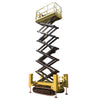
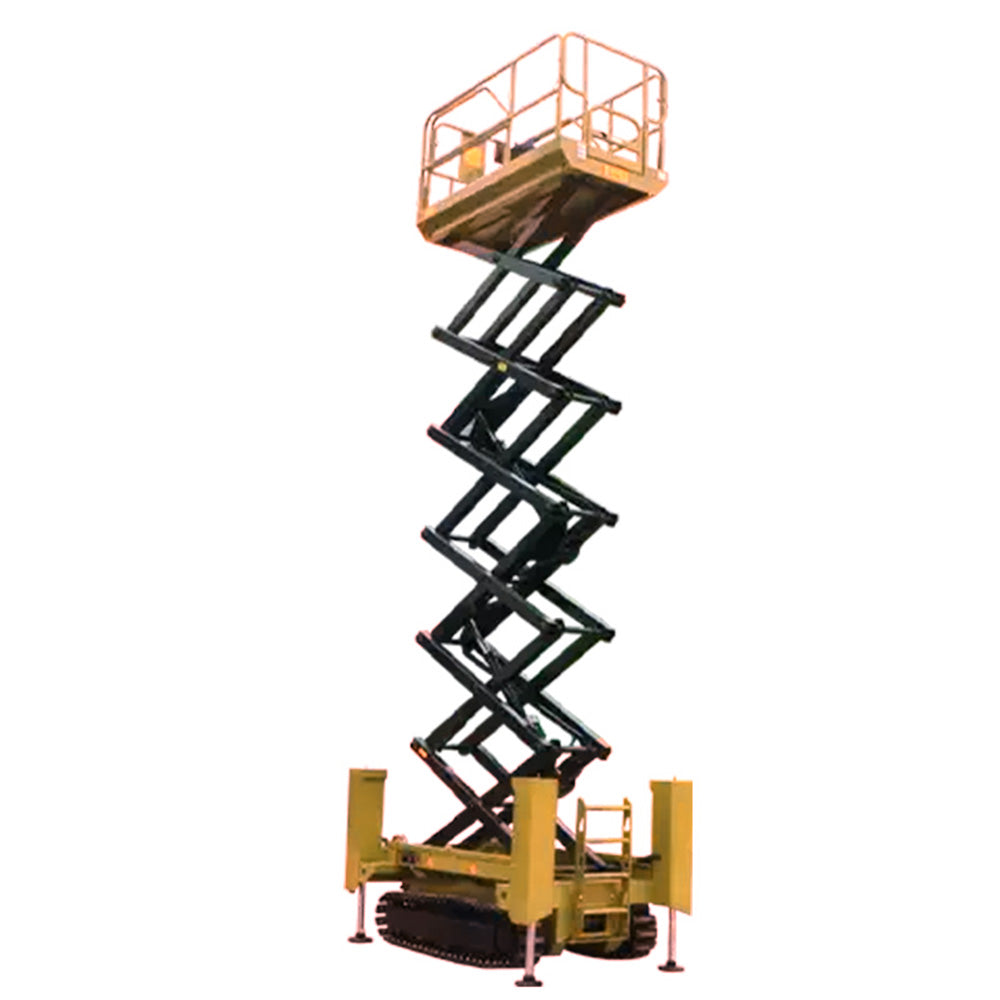
A tracked scissor lift is a vertical aerial work platform mounted on a crawler track base instead of standard wheels. The lift platform rises vertically using scissor arms, while the tracked undercarriage helps the machine move across softer or uneven surfaces before setup.
The key difference is mobility over challenging ground. A tracked scissor lift does not provide horizontal outreach like a boom lift, but it can reach work points directly above the machine in places where a regular wheeled scissor lift may lose traction or damage sensitive surfaces.
Best Uses for Tracked Scissor Lifts
- Outdoor building maintenance on grass, gravel, or mixed ground
- Landscape, park, resort, and garden maintenance
- Farm, greenhouse, and facility inspection work
- Construction sites with unfinished ground surfaces
- Solar panel, lighting, and signage installation where vertical access is enough
- Temporary outdoor events where ground protection matters
- Property maintenance where a heavy wheeled lift may leave deeper marks
Main Benefits of a Tracked Scissor Lift
1. Better Traction on Soft or Uneven Ground
Rubber tracks create a larger contact area than wheels, which can improve traction and reduce ground pressure. This is useful on grass, compacted soil, muddy paths, and sites where a wheeled lift may struggle to move safely.
2. More Ground-Friendly Than Many Wheeled Machines
Tracked equipment can help reduce rutting and surface damage compared with narrow wheels, especially when used carefully with proper ground assessment. For landscaping and finished outdoor areas, this can be an important buying factor.
3. Stable Vertical Work Platform
When the work point is directly above the machine, a tracked scissor lift gives operators a practical platform for tools and maintenance tasks. It can be more efficient than a boom lift when horizontal outreach is not required.
4. Useful for Multi-Surface Jobsites
Many real worksites are not one surface. A maintenance route may include concrete, grass, gravel, slopes, and unfinished ground. A tracked scissor lift can be useful when the machine must move between these areas.

Limitations Buyers Should Understand
A tracked scissor lift is not a universal replacement for every aerial work platform. It still lifts vertically, so it cannot reach over obstacles like a boom lift. It may also travel more slowly than some wheeled lifts, and track maintenance should be considered in the long-term ownership cost.
Because outdoor ground conditions can change with rain, soil compaction, slope, underground services, and surface strength, buyers should not assume tracks solve every stability problem. Ground assessment, platform load control, and manufacturer instructions remain essential.
Tracked vs Electric vs Diesel vs Bi-Leveling Scissor Lift
| Lift Type | Best For | Main Limitation |
|---|---|---|
| Tracked scissor lift | Soft ground, grass, gravel, mixed outdoor surfaces | No horizontal outreach; slower travel than some wheeled lifts |
| Electric scissor lift | Indoor concrete floors, warehouses, quiet maintenance | Not ideal for rough outdoor terrain |
| Diesel scissor lift | Outdoor construction and heavier jobsite use | Exhaust and noise make it less suitable indoors |
| Bi-leveling scissor lift | Sloped or uneven work areas needing platform leveling | More specialized and often higher cost |
| Boom lift | Jobs needing horizontal outreach over obstacles | Smaller basket and often higher cost for vertical-only work |
If your main decision is between vertical access and outreach, read our scissor lift vs boom lift guide. If your main decision is ground access, a tracked scissor lift may be the better topic to evaluate first.
When a Tracked Scissor Lift Is the Right Choice
- The work point is mostly directly above the machine.
- The ground is grass, soil, gravel, or mixed outdoor surface.
- A wheeled scissor lift may lose traction or damage the surface.
- The job needs a larger platform than a boom lift basket.
- The site has limited ground preparation but still allows safe tracked travel.
- The buyer needs a practical outdoor vertical access platform.
When Not to Choose a Tracked Scissor Lift
- The work point requires horizontal outreach over walls, trees, roofs, or equipment.
- The site is smooth indoor concrete where an electric scissor lift is simpler.
- The job requires fast travel across a large open construction site.
- The ground is too soft, unstable, steep, or unknown for safe setup.
- The platform load exceeds the rated capacity of the available model.
For obstacle access, compare boom lift aerial platforms. For compact narrow access with crawler mobility and outreach, compare a spider boom lift.

Buying Checklist for Tracked Scissor Lifts
1. Working Height
Confirm the required working height based on the operator's actual task, not only the building or structure height. Leave a practical margin, but do not buy unnecessary height if it makes the machine too large for transport and access.
2. Platform Capacity
Add operators, tools, and materials. Outdoor jobs often include heavier tools or replacement parts, so the rated capacity should match real use. Overloading is unsafe and can affect stability.
3. Ground Type and Slope
Describe the ground honestly: grass, soil, gravel, mud, compacted road, concrete, slope, or mixed surface. Ask the supplier about travel limits, slope limits, and safe setup requirements.
4. Access Route
Measure gates, paths, ramps, doorways, and tight turns from unloading point to work area. A tracked lift must be able to reach the site before its benefits matter.
5. Transport and Storage
Check machine dimensions, weight, trailer or truck loading requirements, and storage conditions. Tracks and batteries or engines should be protected and maintained according to the manual.
6. Service and Parts
Ask about track replacement, hydraulic service, battery or engine maintenance, spare parts, manuals, and after-sales support. A specialized lift should have a clear maintenance plan.
Safety Considerations
Tracked scissor lifts should be selected and operated according to the manufacturer's manual, site risk assessment, and local regulations. OSHA's scissor lift guidance highlights hazards such as falls, tip-overs, and crushing risks, and explains the importance of stable setup and trained operators. The official guidance is available at osha.gov.
For outdoor tracked lift work, buyers should pay extra attention to changing ground conditions, rain, slopes, hidden voids, underground services, platform load, and wind. Tracks can improve travel over difficult surfaces, but they do not replace safe setup and inspection.
Information to Send Before Requesting a Quote
- Required working height and platform load
- Photos or video of the ground and work area
- Ground type and whether slopes are present
- Indoor or outdoor use ratio
- Access width from unloading point to the job area
- Expected daily operating time
- Country or region for certification and shipping requirements
- Whether horizontal outreach is needed
Final Recommendation
Choose a tracked scissor lift when the job needs vertical access on grass, soil, gravel, or mixed outdoor surfaces. Choose an electric scissor lift for clean indoor floors, a diesel scissor lift for heavier outdoor construction conditions, and a boom lift when the work point requires outreach.
ComanLifting supplies tracked scissor lifts, electric scissor lifts, diesel scissor lifts, and bi-leveling scissor lifts for different access needs. Send your working height, terrain, access route, and site photos through the contact page, and our technical team can recommend a suitable model.